

Service areas
Service areas and permit jurisdictions
EMAE & Sons Inc works across Ventura, Los Angeles and Orange County. Each city below is asked the same five questions, answered from its own published code.
Jurisdictions covered
Grouped by county, because that is how the region is commonly described. The deciding authority is the city: municipal codes are adopted city by city, and two cities sharing a border can protect the same tree or permit the same wall at different thresholds. Westlake Village is the exception that shows the difference, and it is marked below.
Ventura County
- Thousand Oaks
- Building and Safety · Public Works for grading
Los Angeles County
- Los Angeles
- Bureau of Engineering · Building and Safety
- West Hollywood
- City Engineer
- Calabasas
- Community Development · City Engineer for grading
- Agoura Hills
- Community Development · Planning Commission
- Westlake Village
- Los Angeles County Public Works
Orange County
- Costa Mesa
- Public Works, Engineering Division
How these jurisdictions differ
The same five questions, asked of every city. Read across a row for a single city, or down a column to compare them. Each city name links to that city's full section below.
Two columns concern different parties. The contractor license column records who may carry out the construction. The engineer or arborist column records a report the city requires from a licensed professional, which is a separate appointment from the contractor.
| Jurisdiction | City issues it?or another authority | Approval before permit?a sign-off you need first | Contractor license named?which classification the city accepts | Oak tree permit?and from what size | Engineer or arborist?a paid specialist you must hire | Can you hire EMAE & Sons?Class A license #1107216 |
|---|---|---|---|---|---|---|
| Thousand Oaks | Yes | No | Nostate license only | Yes2″ diameter | Yesgeotechnical report on any site | Yes |
| Los Angeles | Yes | No | Partlycivil engineer's signature | Yes4″ at 4½ ft · scrub oak excluded | Yescivil engineer signs B permit plans | Yes |
| West Hollywood | Yes | Partlydebris plan before work starts | No | Partlypublic trees only, any species | Yesengineer signs the seismic retrofit | Yes |
| Calabasas | Yes | Yesland use review | YesC-39 and B, roofing permits | Yes4″ dbh · scrub oak 1″ | Yescity-qualified arborist for oaks | Yes |
| Agoura Hills | Yes | YesCUP or design review | YesClass A and B, by permit type | Yes6″ at 4½ ft | Yescertified arborist, soil engineer | Yes |
| Westlake Village | NoLos Angeles County does | YesCity Council, for oak work | Noadopts LA County Title 16 | Yes4″ at 4½ ft | YesISA arborist, soils and geology | Yes |
| Costa Mesa | Yes | Partlyoutside agencies clear first | Yesfive classes named | Partlyparkway and median trees only | Yesengineer stamps the traffic plan | YesClass A named in the city's checklist |
- Yes
- Partly — something close applies, but not the same thing
- No — we read the code and there is no such rule
The region applies two distinct models of tree protection. Five of these cities protect named species above a stated diameter, on private and public land alike: Thousand Oaks from two inches; Calabasas, Westlake Village and Los Angeles from four; and Agoura Hills from six. West Hollywood and Costa Mesa take the opposite approach, protecting every species at any size but only on public ground, leaving private planting unregulated. Three cities in the same county then diverge on a single species: Agoura Hills protects all scrub oak regardless of size, Calabasas protects it above one inch, and Los Angeles excludes it expressly. Unincorporated county land between them sets a higher threshold of eight inches, stated as twenty-five inches of circumference, and a separate threshold for oaks with more than one trunk.
The last column records EMAE & Sons answering rather than a city rule, and it concerns the contractor's license only. Work inside the public street carries further conditions. Los Angeles, for example, requires insurance with a one million dollar occurrence limit before it will issue a B permit. Check the license on the state board record →
Sources for every answer
Each city's own published code, together with the county and state records behind the remainder of the table. No entry above is drawn from a secondary source.
- Thousand Oaks
- Thousand Oaks Municipal Code, Title 8 (Ord. 1741-NS)
- Los Angeles
- LA Bureau of Engineering, LADBS bulletin P/BC 2026-002, and LAMC Chapter IV Article 6 (Ord. 186,873)
- West Hollywood
- West Hollywood Municipal Code, Ch. 11.18, Ch. 11.36 and Title 13 (Ord. 25-26, 2/2/2026)
- Agoura Hills
- Agoura Hills Municipal Code, Art. IX Ch. 6 (Ord. 25-482), and the city's Building and Safety permit guides
- Westlake Village
- LA County Public Works, Building and Safety contract cities
- LA Bureau of Engineering — B permit requirements in detail
- The security, insurance and plan-check conditions behind the A and B permit split.
- City of Thousand Oaks — oak tree permits
- The two-inch threshold and the protected zone around a trunk, in the city's own words.
- LA County Public Works — building and safety contract cities
- The list Westlake Village appears on, and the four neighboring cities it does not.
- LA County — Grading Guidelines (PDF)
- Applies to unincorporated county land, which is not any of the cities above.
- City of Agoura Hills — re-roofing with solar PV policy (PDF)
- A permit guide naming which contractor classifications may pull which permit, where the city's own code names none.
- City of Calabasas — roof repair, replacement and covering handout (PDF)
- Names C-39 and Class B for a roofing permit, where the city's own municipal code names no classification at all.
- California Contractors State License Board — license #1107216
- The state board's own record, which is the only place the last column can be checked.
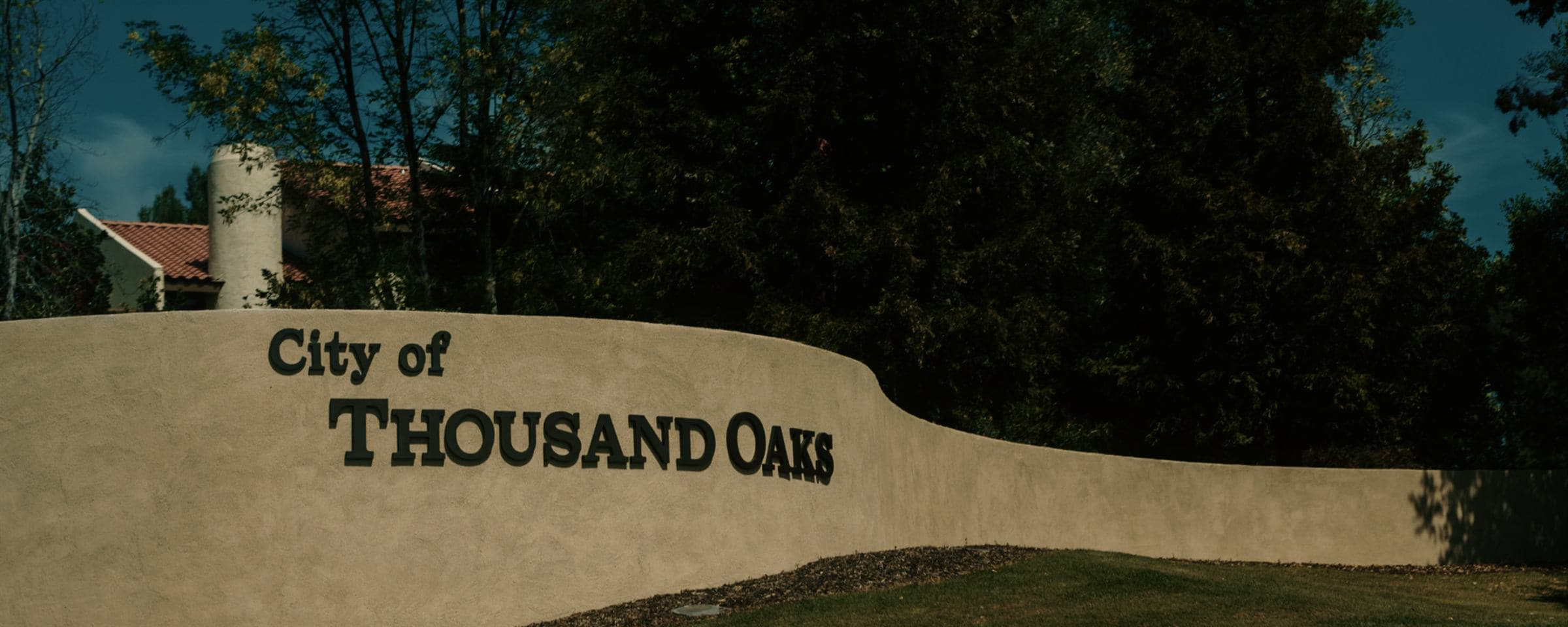
Ventura County
City of Thousand Oaks
including Newbury Park, a district of the city rather than a separate authority
- Who issues the permit
- Building and Safety, on (805) 449-2500. Newbury Park is a district of the city rather than a permitting authority of its own, so work there is issued under the same code and the same fee schedule.
- Grading and right-of-way
- Yes. Grading is administered by Public Works under a different title of the municipal code, so a hillside job runs two approvals in parallel rather than one.
- What is asked of the contractor
- Applications for plumbing, mechanical and electrical permits must come from a contractor licensed by the Contractors State License Board or their authorized representative, with an owner-builder route for an owner-occupied dwelling who performs the work personally. The city relies on the state license rather than naming classifications of its own.
What differs in Thousand Oaks
The state grading exemptions are deleted
Thousand Oaks removed the state's list of grading-permit exemptions from its code outright and requires that no grading occur without a permit first. Where most jurisdictions exempt small volumes of earthwork, this one exempts none.
The retaining wall exemption carries three tests
No permit is required for a wall not over four feet from the bottom of the footing to the top, provided it does not extend a yard on a downslope, and the soil retention depth is at most thirty-six inches above grade without a surcharge, or eighteen inches with a surcharge or where it supports a slope.
Nothing sits on a slope steeper than 5:1 unqualified
No structure may be built on a slope greater than five to one without a finding by the Building Official that the site is safe for its intended use, and the Building Official may require a geological investigation, a soil engineer's report, or a foundation designed by a registered civil or structural engineer.
A geotechnical report can be required on any site
The Building Official may require an engineering geotechnical or geologic report from a State certified engineering geologist on any site as a condition precedent to issuing a permit. It is not reserved for hillside lots.
Wood is not permitted in a retaining wall
Wood may not be used in retaining or crib walls for structures in Seismic Design Category D, E or F, which covers this area. Cut slopes are capped at two horizontal to one vertical unless a geotechnical report justifies steeper.
Expansive soil drives the foundation
Footing and slab requirements follow a local table keyed to the soil's expansion index. Above an index of one hundred and thirty the foundation needs special design by an engineer registered as a soil or civil engineer in California.

Los Angeles County
City of Los Angeles
Brentwood and the Westside
- Who issues the permit
- Two departments, and which one applies is decided by where the work sits rather than by what it is. The Bureau of Engineering permits work in the public right-of-way; the Department of Building and Safety permits work on private property.
- Grading and right-of-way
- Yes, and the split is by location rather than by trade. The same retaining wall is a Bureau of Engineering matter in the parkway and a Building and Safety matter a few feet away on private land, under different thresholds and different paperwork.
- What is asked of the contractor
- A B permit requires security covering the City Engineer's construction estimate plus a fifteen percent contingency and a fifty percent cost increase factor, and insurance with a one million dollar occurrence limit including collapse and underground coverage where excavation exceeds fifteen feet. Plans must be signed by a California licensed civil engineer. Plan check runs four to twelve weeks depending on the current backlog.
What differs in Los Angeles
Three permit instruments in the right-of-way
An A permit covers repair or reconstruction of curbs, sidewalks, driveway approaches and gutters where the work matches existing grades without a survey or engineered plans. A B permit covers extensive improvements, including retaining walls, sewers and storm drains. An R permit is the revocable one, for a structure that encroaches and stays.
Retaining walls over two feet in the right-of-way
A revocable permit for a wall over two feet requires a B permit for approval of plans and structural calculations. The standard plans cover walls up to six feet; above that, or where the soil cannot carry the toe pressure, the design goes to structural review.
Stacked block walls are not allowed
On private property, walls built from wood, rubble or stacked blocks, including pre-manufactured blocks stacked on one another, are not allowed unless they carry a current Research Report from the Engineering Research Section, or an Evaluation Report from an approved publishing agency.
The exemption fails on a slope
The exempt wall may not be built where the existing slope below or beneath it is steeper than one vertical to five horizontal, a twenty percent slope. Where several walls replace one existing slope, a permit is required if that slope is steeper than twenty percent.
Drainage cannot cross a property line
Surface drainage concentrated or redirected by a wall must reach the public street by non-erosive devices, and no cross-property drainage is permitted. Walls and subdrains sit within the property, and no grading is permitted on adjacent land.
A hillside condition that arrives with the permit
Where the roadway fronting the property is less than twenty feet wide, the owner is required as a condition of the R permit to widen it to a minimum paved width of twenty feet, which may include curb and gutter. A land survey must accompany the application.
Protected trees answer to a third body again
A permit to relocate or remove a protected tree comes from the Board of Public Works, not from the Bureau of Engineering or from Building and Safety. Protected means an oak, Southern California black walnut, western sycamore or California bay of four inches cumulative diameter measured four and a half feet above the ground, and the scrub oak is expressly excluded.
Removing a tree illegally can freeze building permits for ten years
Where a protected tree has been removed in violation of the code, the Bureau of Street Services may ask the Superintendent of Building to withhold building permits on that property for up to ten years, and to revoke any permit where construction has not started. The notice is recorded with the County Recorder, so it travels with the title.
The fees are published, and they are not small
An application to remove or relocate a protected tree carries a non-refundable application fee of $805.99 and a non-refundable inspection fee that begins at $2,892.48 for one or two trees, rising to $5,982.58 for six to ten. Replacement runs at four specimens for each tree removed, and anything over two trees goes to a full public hearing at the Board.
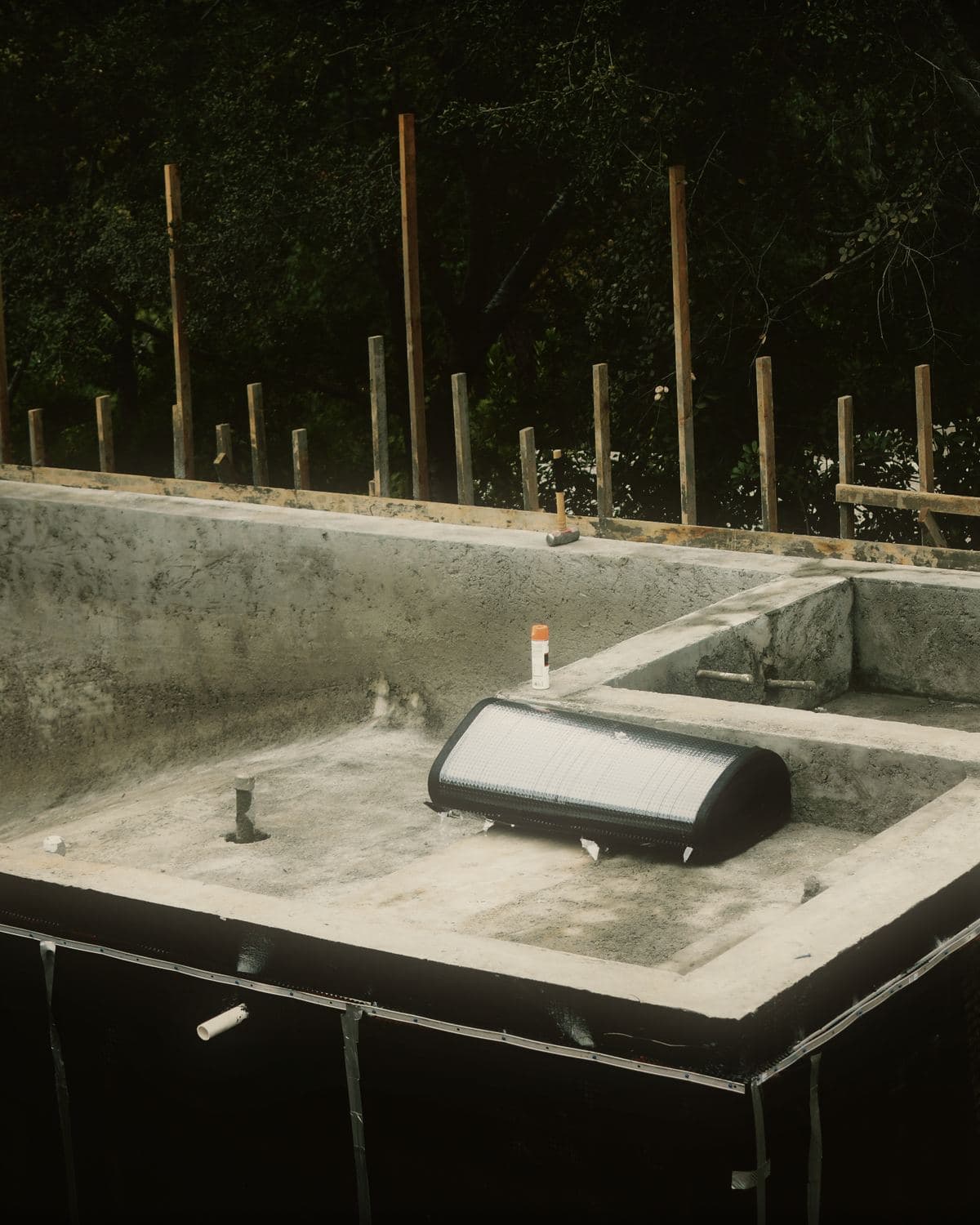
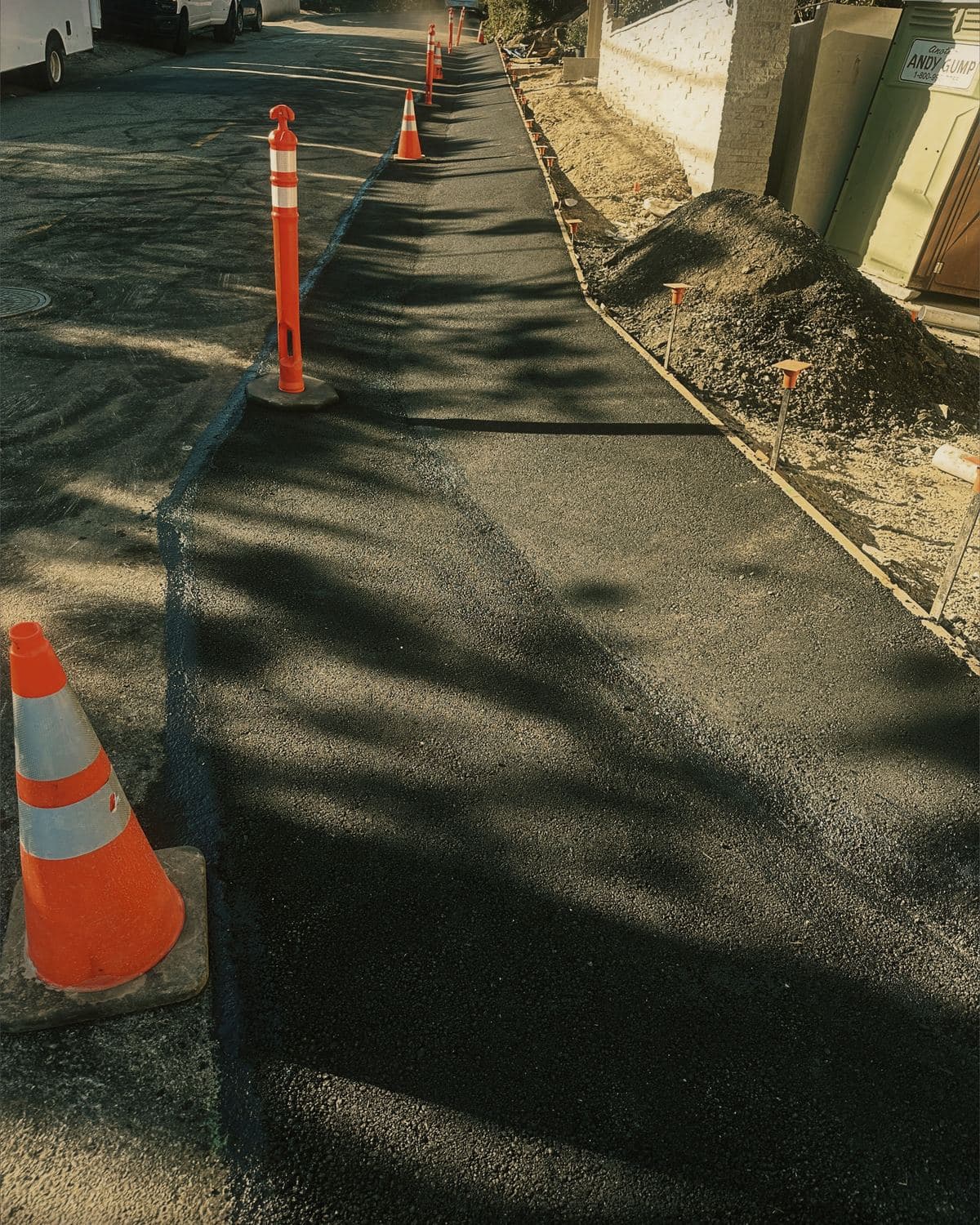

Los Angeles County
City of West Hollywood
right-of-way work
- Who issues the permit
- The City Engineer, on a form the City Attorney has approved. Issue is within the city's discretion rather than automatic on a complete application.
- Grading and right-of-way
- Yes. An encroachment permit is not a substitute for a building permit where one is otherwise required, and the code says so directly, so right-of-way work and the building work behind it are two approvals.
- What is asked of the contractor
- Chapter 11.18 sets conditions on the work rather than naming license classifications: all construction must conform to the West Hollywood Building Code, the Municipal Code and any applicable standards and policies, and the permit must be produced for inspection on request. Seismic retrofit work is the exception, and what it names is a designer rather than a builder: the analysis and the plan statement belong to a California registered civil or structural engineer.
What differs in West Hollywood
A privilege, not a right
The code describes an encroachment permit as granted at the city's discretion, a privilege extended as a convenience to an adjoining owner rather than a right. It can be conditioned or refused on a complete application.
Emergency work still needs the permit
Construction, repair or excavation necessary to preserve life or property may proceed outside office hours without a permit in hand, but one must be obtained within one business day. Starting any other work without a permit means stopping and applying.
No structural support for private structures
An encroachment may not provide above-ground or permanent underground structural support for any structure on private property, may not obstruct access to underground utilities or significantly impair views, and must maintain pedestrian passage fully accessible under Title 24.
Enforcement runs to cost recovery
Where an encroachment has no permit or breaches one, the owner has thirty days from notice to remove it or apply. After that the city may remove it and restore the public property, and the owner is liable for the city's direct and indirect costs.
The building code is the county's, read as the city's
West Hollywood adopts Title 26 of the Los Angeles County Code, and with it the 2025 California Building Code including the grading appendix. The definitions then redirect every county reference back at the city, so the County Engineer means the West Hollywood Building Official. Separately, a plan for controlling construction debris must be approved by the Director of Public Works before any construction work of any type starts.
Older buildings over parking carry a retrofit duty
Where a wood-frame building was permitted before 1978 and has parking or other open space on the ground floor with living space above, the owner must have a registered civil or structural engineer investigate and analyze it, and strengthen it if it falls short. The engineer stays involved: structural observation during construction is required, not optional.
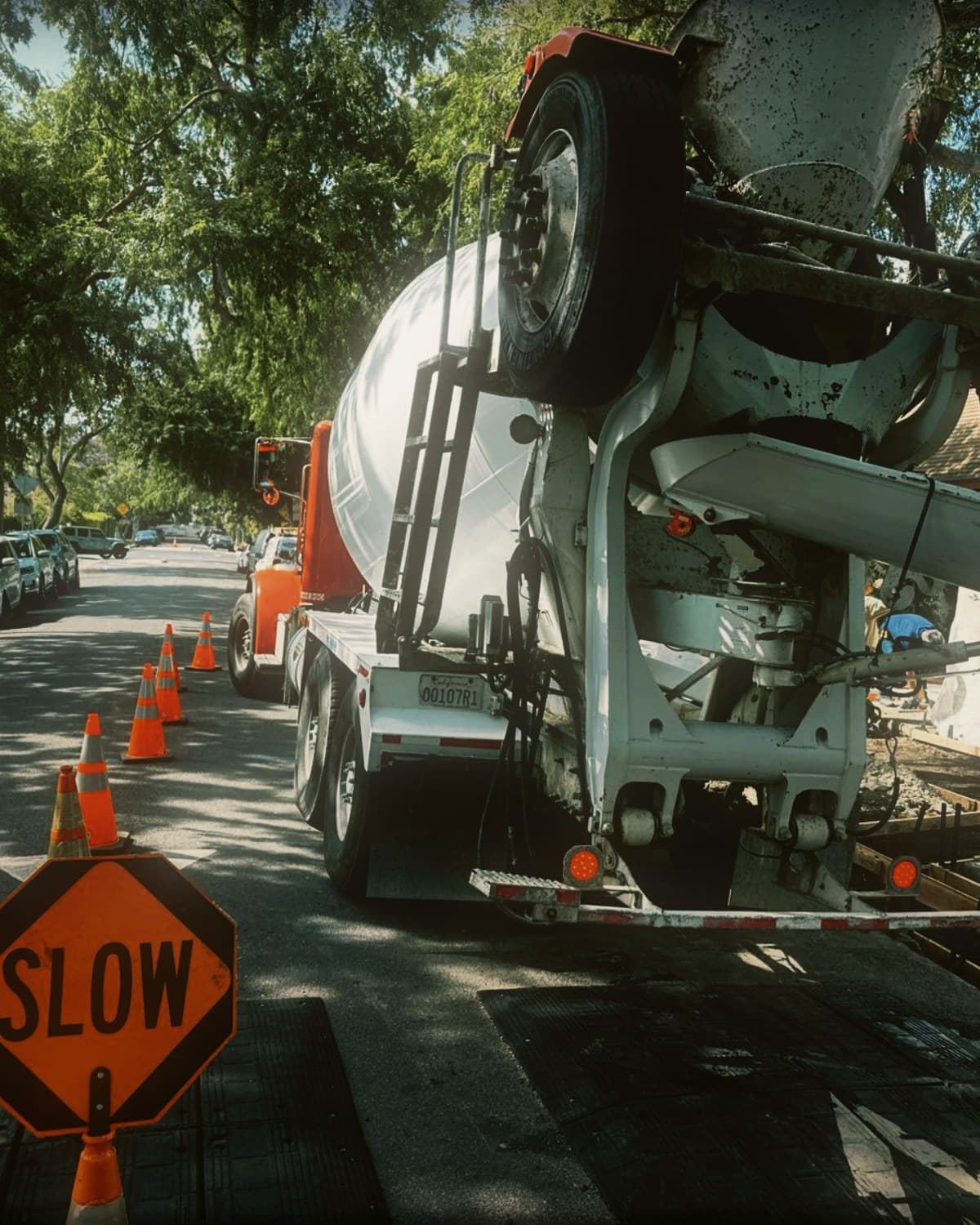
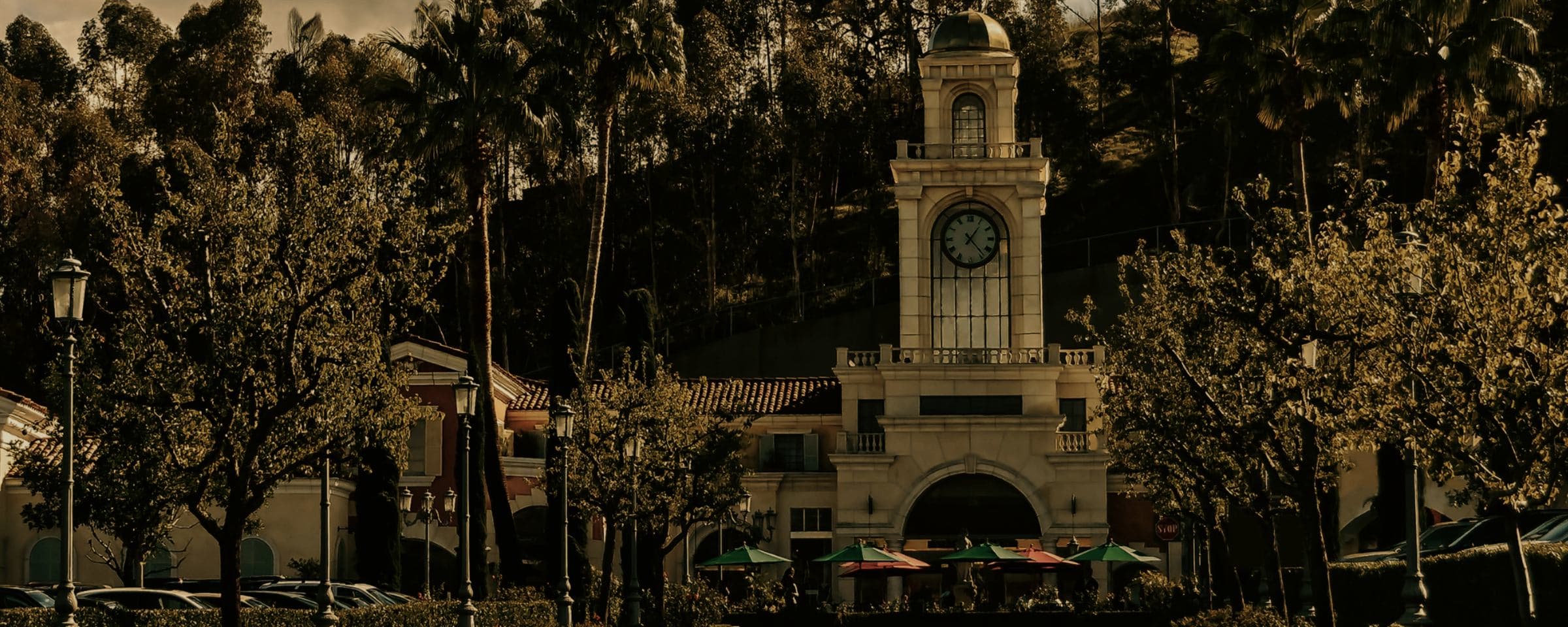
Los Angeles County
City of Calabasas
the Las Virgenes corridor
- Who issues the permit
- The Community Development Department administers land use and development under Title 17. Grading sits with the City Engineer under Title 15, and an oak tree permit is a third approval with its own application, its own findings and its own review authority.
- Grading and right-of-way
- Yes, on both counts. Land use and grading are separate titles administered by separate officers, and an oak tree permit runs alongside either of them rather than inside one.
- What is asked of the contractor
- The municipal code names no license classification, but the Building and Safety handouts do. A roofing permit goes to a C-39, or to a Class B where the roof is part of a job with the multiple-trade requirement the state board sets for that class. The named professional requirements sit in the reports rather than the code: an oak tree report by a city-qualified arborist, and hydrology, geology and soils reports prepared by licensed engineers where a hillside or overlay district applies.
What differs in Calabasas
Grading stops for the wet season
Grading is prohibited from 1 October through 15 April unless the City Engineer determines that soil conditions are suitable and that adequate and effective erosion and sediment control measures will be in place throughout. The default position is closed for six and a half months of the year.
Five grading bands, set by the slope before work starts
Below ten percent, earth may be redistributed over large areas. Between ten and twenty, landforms must retain their natural character and split-level design is required. Between twenty and thirty, ridgelines, bluffs, rock outcroppings and natural drainage ways must keep their natural form. Above fifty percent, development is to be avoided.
Paving near an oak counts as altering it
No oak tree may be altered without an oak tree permit, and altering expressly includes excavating or paving within the protected zone. That zone begins five feet outside the dripline and is never less than fifteen feet from the trunk, or fifty feet for a heritage oak. An oak tree is a Valley Oak or California Live Oak of four inches diameter at breast height or greater, or a scrub oak over one inch.
Oak removals accumulate against the parcel
The director may approve removal of up to three living oaks under six inches each and twelve inches aggregate, counted cumulatively for the parcel rather than for the project. A notice is then recorded against the property, so a previous owner's removals reduce what the current owner may do.
Wall height is set by which way the wall faces
An individual retaining wall is capped at six feet, and an outward-facing wall in the front setback at four. Terraced or tiered walls must sit at least four feet apart horizontally. A wall retaining a grade change of thirty-six inches or less is exempt from a land use permit where Title 15 requires no grading permit.
Driveway geometry is regulated in the code
Minimum width is sixteen feet, or twenty where the driveway slope exceeds ten percent. Average slope is capped at seventeen percent with no portion over twenty, and no driveway may exceed three hundred feet unless there is no other feasible location to site the structure.
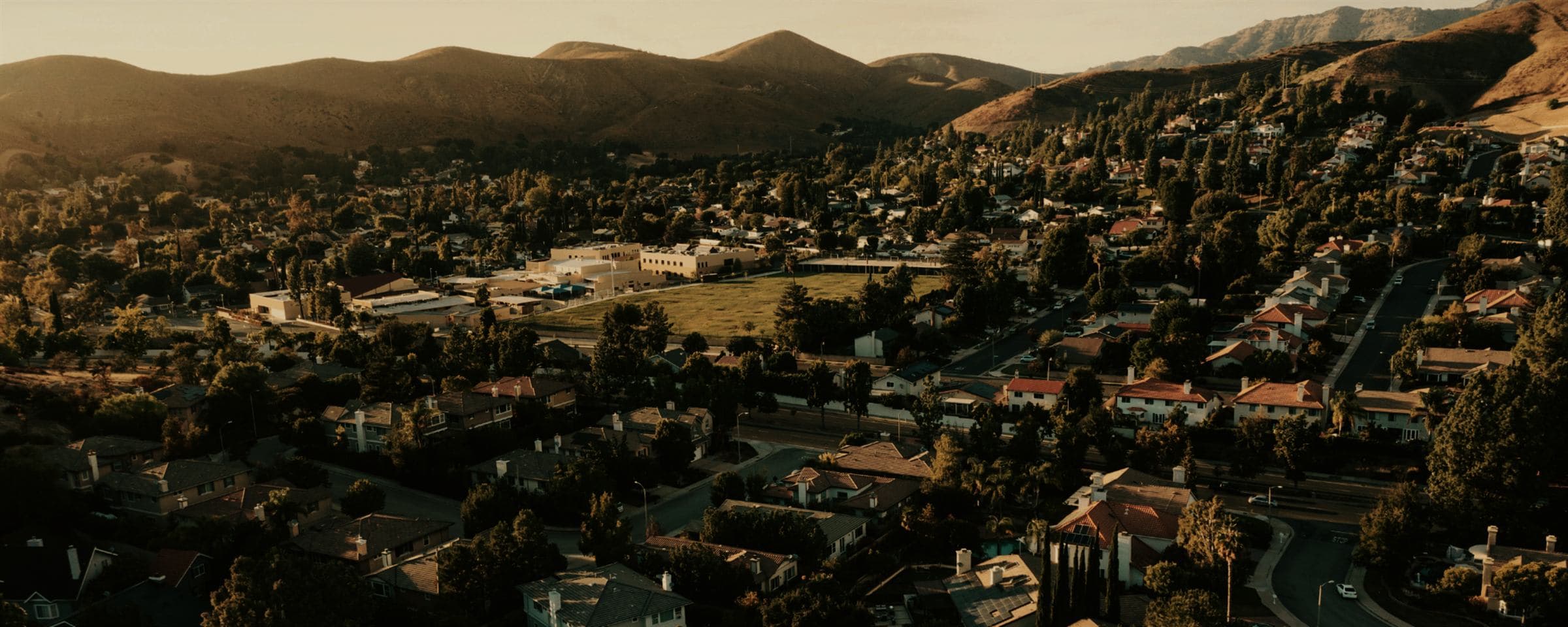
Los Angeles County
City of Agoura Hills
hillside and significant ecological areas
- Who issues the permit
- The Community Development Department, but on a hillside parcel the first decision belongs to the Planning Commission rather than to a permit counter.
- Grading and right-of-way
- Yes, and it comes first rather than alongside. A conditional use permit or an architectural review approval must be obtained before any building or grading permit is issued, so the discretionary approval precedes the ministerial one instead of following it.
- What is asked of the contractor
- The municipal code names no license classification, but the Building and Safety handouts do, permit type by permit type: a demolition permit goes to a C-21, a Class A or a Class B-1; a pool demolition to a B, a C-53 or a C-21; a re-roof to a C-39 or a B; and removing a solar array to re-roof under it needs a C-46, a C-10, an A or a B rather than the roofer. On site, protective fencing at least five feet high with dark green mesh must be installed at the outermost edge of every tree protection zone before work commences, and inspected before it is removed. Applications in hillside and significant ecological areas carry reports from soil engineers and engineering geologists, and archaeological studies where existing evidence indicates artifacts are likely.
What differs in Agoura Hills
A hillside starts at ten percent
A hillside area is defined as a parcel whose average slope before grading is greater than ten percent. That threshold is lower than the term suggests, and a substantial number of parcels in the city meet it.
The approval comes before the permit
On any parcel that is in, or partly in, a hillside area or a significant ecological area, a conditional use permit or architectural review approval must be obtained before the issuance of any building or grading permit, before a minor land division, and before fill material is imported to alter natural terrain.
Which approval depends on size and on setting
A conditional use permit is required where the hillside parcel is five acres or greater, where the density or open space rules would otherwise prohibit use of a smaller parcel, where a major slope failure has occurred, and in a significant ecological area regardless of parcel size. Architectural review applies elsewhere.
Open space is set by slope
The minimum share of the parcel that must remain open space rises with average slope: 32.5 percent between ten and fifteen percent, 62.5 percent between twenty-one and twenty-five, 92.5 percent between thirty-one and thirty-five, and 97.5 percent above that.
Work inside a tree protection zone is done by hand
All work within the tree protection zone of a protected tree must be accomplished using only hand tools, performed in the presence of the applicant's tree consultant, with a certification letter filed within five working days. The zone begins five feet outside the dripline and is never less than fifteen feet from the trunk.
A tree permit is triggered twenty-five feet out
A development tree permit is required for construction that directly affects a protected tree or proposes ground disturbance within twenty-five feet of one, measured from the edge of the protection zone rather than from the trunk. Protected trees are all scrub oak regardless of size, and any oak, California sycamore or Southern California black walnut of six inches diameter measured at four and a half feet.
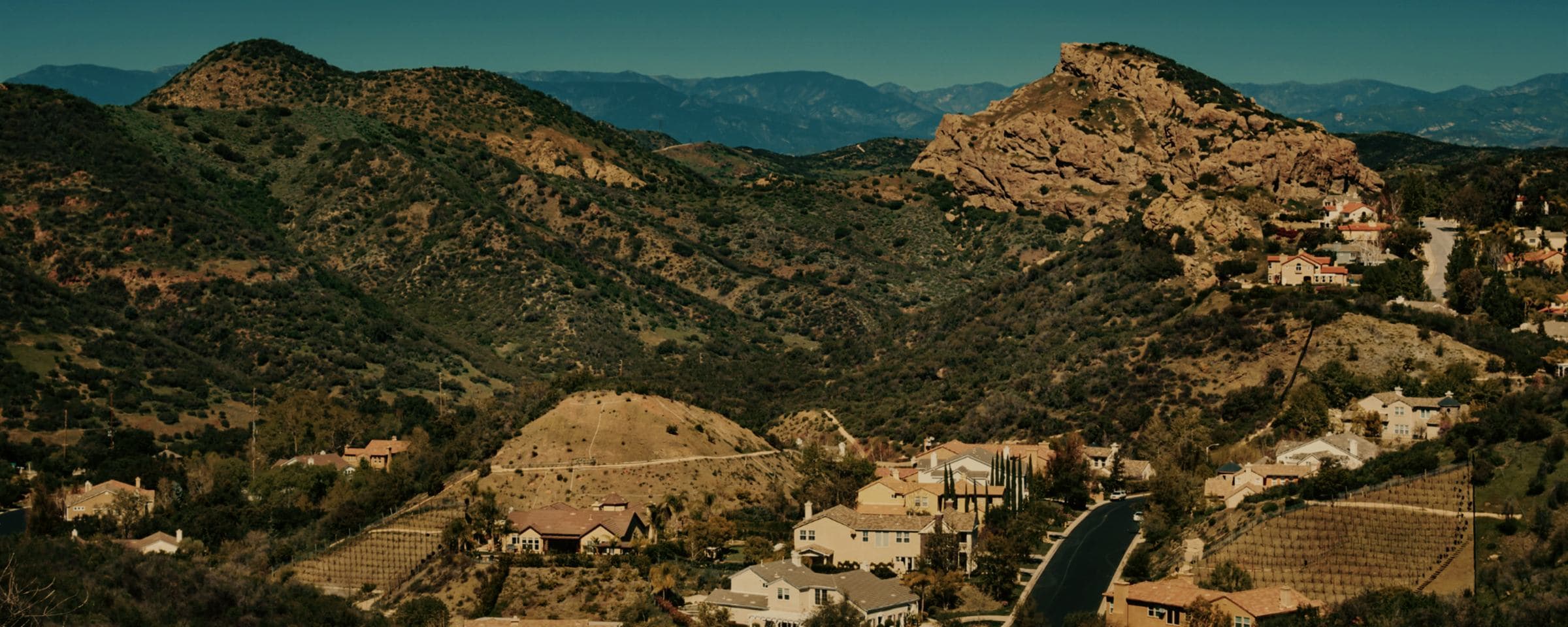
Los Angeles County
City of Westlake Village
building and safety performed by the county under contract
- Who issues the permit
- Los Angeles County Public Works, Building and Safety Division, rather than a city department. Westlake Village is one of thirteen cities for which the county performs the building and safety function under contract.
- Grading and right-of-way
- The question does not arise in the same form here. Because the function sits with the county rather than the city, plan check, permit issuance and inspection all run through a county district office.
- What is asked of the contractor
- County requirements apply rather than a city's, so the submittal standards, the plan check and the inspection process are the county's throughout, and highway work runs on the county's adopted permit ordinance. Where a protected tree is involved, a tree report by an arborist certified by the International Society of Arboriculture is required, and the city may have it peer-reviewed by a second arborist at the applicant's cost.
What differs in Westlake Village
There is no city building department to call
Westlake Village contracts building and safety to Los Angeles County Public Works. Anyone expecting the sequence they went through in a neighboring city will be dealing with a different organization, different offices and a different record system.
Neighboring cities in the same county do not share it
Calabasas and Agoura Hills sit in Los Angeles County and are not contract cities. Both run their own departments under their own municipal codes, so being in the county does not predict which authority holds the file.
Removing an oak goes to the City Council
A protected tree permit is approved by the City Council at a noticed public hearing, not by a planner over the counter. Only trimming, and encroachment into the protected zone that an arborist finds will not harm the tree, can be approved administratively by the Director.
Paving and trenching count as damaging the tree
Damage is defined to include paving, changing the natural grade, trenching, excavating or building within five feet beyond the dripline or fifteen feet from the trunk, whichever is greater. A protected oak is one of four inches diameter, stated as twelve and a half inches of circumference measured four and a half feet above mean natural grade.
Replacement is bonded for five years, and the clock restarts
Between one and four replacement trees may be required for each oak removed, at a minimum twenty-four inch box, secured by a bond guaranteeing survival for five years. If a replacement dies inside that window it must be replanted and the five years begin again. Each individual tree damaged is a separate offense.
Graded slopes are covered within thirty days
Every graded area steeper than ten percent must be revegetated, and all slopes covered within thirty days of grading being completed with jute netting, a geotextile or a similar device, unless a registered soils engineer requests otherwise in writing. Planting must reach ninety percent coverage in the first year.
Work in the highway runs on the county's ordinance
The city adopted Title 16, Division 1 of the Los Angeles County Code as its own Highway Permit Ordinance rather than writing one. So the rules for working in the street here are the county's rules, which is the same pattern as building and safety.
Orange County
City of Costa Mesa
right-of-way and commercial flatwork
- Who issues the permit
- Public Works, through its Engineering Division, issues encroachment permits for work in the city right-of-way.
- Grading and right-of-way
- Yes, and outward as well as inward: approvals and, where applicable, permits from other agencies must be obtained before the city permit is approved, among them Caltrans, Mesa Water and the Costa Mesa Sanitation District.
- What is asked of the contractor
- Applicant and contractor names and addresses including a 24-hour emergency contact, a letter of authorization where the two differ, scaled drawings and work limits, a city business license number and a state license number stating its classification, and certificates of insurance with endorsements.
What differs in Costa Mesa
The city names the licenses it will accept
Contractors working within the city right-of-way require a Class A, C-8, C-12, D-06 or C-34 license, rather than the question being left to the state board. A C-36 is admitted alongside a Class A, C-8 or C-12 to complete street paving. A C-31 may only perform traffic control, and only where there is no physical construction in the right-of-way.
Traffic control needs an engineer's stamp
Where a traffic control plan applies it must carry the current traffic control notes, be stamped by a registered civil or traffic engineer, and be approved by the city's Transportation Division.
The permit stays on site
The issued encroachment permit must be maintained on site for the duration of the construction work.
Trees in the parkway belong to the city
A permit is required to install, replace or alter any tree in a median, parkway or tree easement, and altering is defined as trimming more than a quarter of the tree's mass within one year. Removing one as a convenience is replaced at three trees for one, and the city picks both the species and the planting spot.
Protection goes up before the digging starts
No construction or excavation may begin without a fence, guard or frame protecting any tree on public property, a minimum of five feet from the trunk, and the Director of Public Services may widen that at their own discretion.
Built under this authority
Sources and currency
Every requirement above was read at the issuing authority's own published code or permit page on 16 August 2026. Municipal codes are amended, and each section links to its source so the current text can be confirmed directly.
EMAE & Sons has also completed commercial demolition and site development in Pomona and a detached accessory dwelling unit in Simi Valley. The requirements for those two cities have not yet been read at source, so they are not set out above. Every project, on a map →
Questions about permits and jurisdictions
Is Newbury Park a separate permitting authority from Thousand Oaks?
No. Newbury Park is a district of the City of Thousand Oaks rather than a city of its own, so a permit for work there is issued by Thousand Oaks Building and Safety on (805) 449-2500, under the same code and the same fee schedule. EMAE & Sons Inc built a detached accessory dwelling unit in Newbury Park under that authority.
Which authority issues a building permit in Westlake Village?
Los Angeles County Public Works, Building and Safety Division, rather than the city. Westlake Village is one of thirteen cities for which the county performs the building and safety function under contract, so plan check, permit issuance and inspection run through a county district office. Neighboring Calabasas and Agoura Hills sit in the same county and are not contract cities, so both run their own departments under their own municipal codes.
Does a hillside project in Agoura Hills need approval before the building permit?
Yes, and the sequence matters. On any parcel that is in, or partly in, a hillside area or a significant ecological area, Agoura Hills requires a conditional use permit or an architectural review approval before the issuance of any building or grading permit. A hillside area is defined as a parcel whose average slope before grading exceeds ten percent, a threshold lower than the term suggests.
Do I need a permit to build a retaining wall in Los Angeles?
It depends where the wall sits, and Los Angeles applies two different tests. In the public right-of-way a revocable permit for a wall over two feet requires a B permit, with plans and structural calculations approved by the Bureau of Engineering. On private property the Department of Building and Safety exempts a low wall built to its standard detail, but the exemption fails where the existing slope below the wall is steeper than twenty percent, and stacked or pre-manufactured block walls are not allowed at all without a current Research Report.
Does a contractor need a particular license classification to work in the public right-of-way?
Yes, and some cities name the classifications in writing. Costa Mesa requires a Class A, C-8, C-12, D-06 or C-34 license for work in the city right-of-way, admits a C-36 alongside a Class A for street paving, and limits a C-31 to traffic control where there is no physical construction. EMAE & Sons Inc holds California license #1107216; its classifications can be checked against the state board record.
When can grading take place in Calabasas?
Calabasas prohibits grading from 1 October through 15 April. The City Engineer may permit it inside that window only on determining that soil conditions are suitable and that adequate and effective erosion and sediment control measures will be in place throughout. The default position is that grading is closed for six and a half months of the year, which is a constraint on the program rather than on the design.
Which contractor classification does Calabasas require for a re-roof?
Calabasas requires a C-39 roofing contractor, or a Class B general building contractor where the roof forms part of a job carrying the multiple-trade requirement the state board sets for that class. The classifications appear in the city's Roof Repair, Replacement and Covering handout rather than in the municipal code, which names none, so reading the ordinance alone returns the wrong answer.
At what size does an oak tree become protected?
The threshold is set city by city and ranges from two inches to eight. Thousand Oaks protects all oak species over two inches in diameter. Calabasas, Westlake Village and Los Angeles protect from four inches, and Agoura Hills from six. On unincorporated Los Angeles County land the figure is eight inches, stated as twenty-five inches of circumference measured four and a half feet above mean natural grade, with a separate threshold for an oak of more than one trunk.
Is scrub oak a protected tree?
It depends on the city, and three neighboring jurisdictions in Los Angeles County answer differently. Agoura Hills protects all scrub oak regardless of size. Calabasas protects a scrub oak over one inch in diameter. Los Angeles excludes it expressly from its protected species. One species can therefore be fully protected, protected above a threshold, or unprotected across three adjoining cities, so the answer follows the address rather than the tree.
How long does plan check take for a Los Angeles B permit?
Plan check for a B permit runs four to twelve weeks depending on the Bureau of Engineering's current backlog. The same permit requires security covering the City Engineer's construction estimate plus a fifteen percent contingency and a fifty percent cost increase factor, and insurance with a one million dollar occurrence limit. Both the program and the cash requirement therefore need establishing before the work can be priced.
Does West Hollywood require an approval before construction starts?
Yes, and it applies to construction work of any type. West Hollywood requires a plan for controlling construction debris to be approved by the Director of Public Works before any construction work begins. That approval precedes the work rather than the permit, which sets it apart from the pre-permit approvals required in Calabasas, Agoura Hills and Westlake Village.
Does EMAE & Sons work outside the cities listed on this page?
Yes. EMAE & Sons Inc works across Ventura, Los Angeles and Orange County, and the seven jurisdictions set out here are the ones whose requirements have been read at source rather than the limit of where the firm works. Completed projects also include commercial demolition and site development in Pomona and a detached accessory dwelling unit in Simi Valley.
Send us the address
The address determines which authority holds the file, and that determines what must be submitted before work can start. Send it with a description of the existing conditions and any drawings you hold, and EMAE & Sons will set out the permitting path and what must be established before the work can be priced.